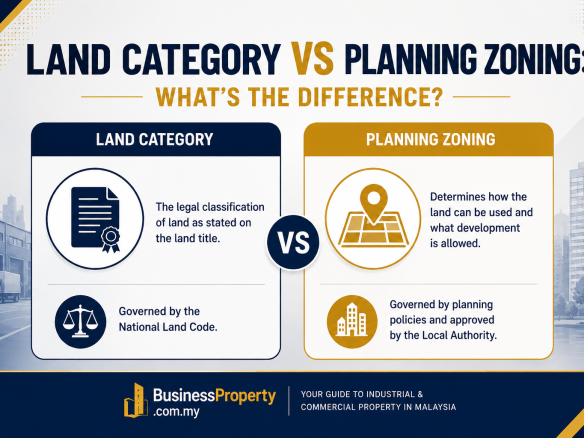
Industrial zoning is one of the most important factors when buying, renting or developing a factory, warehouse or industrial land in Malaysia. The zoning determines what type of business activities are legally allowed on a property and can affect licensing, approvals, operations, expansion plans and future property value.
Main Types of Industrial Zoning in Malaysia
1. Light Industrial
Suitable for businesses with minimal noise, pollution and heavy machinery.
Common Uses:
• E commerce fulfilment centres
• Trading and distribution companies
• Warehouses and storage facilities
• Printing and packaging businesses
• Service and repair workshops
• Food processing (subject to approvals)
2. Medium Industrial
Suitable for businesses with moderate manufacturing activities and machinery usage.
Common Uses:
• Manufacturing factories
• Engineering companies
• Furniture production
• Plastic and metal fabrication
• Assembly plants
• Automotive related industries
3. Heavy Industrial
Designed for industries with higher power requirements, larger machinery and greater environmental impact.
Common Uses:
• Steel and metal processing
• Chemical manufacturing
• Cement and concrete production
• Petrochemical industries
• Large scale manufacturing plants
Why Industrial Zoning Is Important
Before purchasing or renting any industrial property, businesses should verify the zoning status with the local authority.
Key Reasons:
✅ Determines whether your business activity is allowed
✅ Affects business licence and operating approvals
✅ Impacts environmental and regulatory compliance
✅ Influences power supply requirements and infrastructure availability
✅ Affects future expansion and redevelopment potential
✅ Reduces risk of enforcement action or operational restrictions
✅ Important for financing, valuation and investment decisions
What Buyers and Tenants Should Check
Before committing to a factory, warehouse or industrial land:
- Confirm zoning classification with the local authority
- Verify approved land use and building approvals
- Check power supply capacity requirements
- Review lorry and trailer accessibility
- Assess future expansion opportunities
- Confirm suitability for manufacturing, warehousing or logistics operations
- Check environmental and licensing requirements