Renting a factory is a major decision for any business. Whether you’re expanding operations, setting up a warehouse, or starting a manufacturing facility, understanding the rental process can help you avoid costly mistakes.
This guide walks you through the complete process of renting a factory in Malaysia.
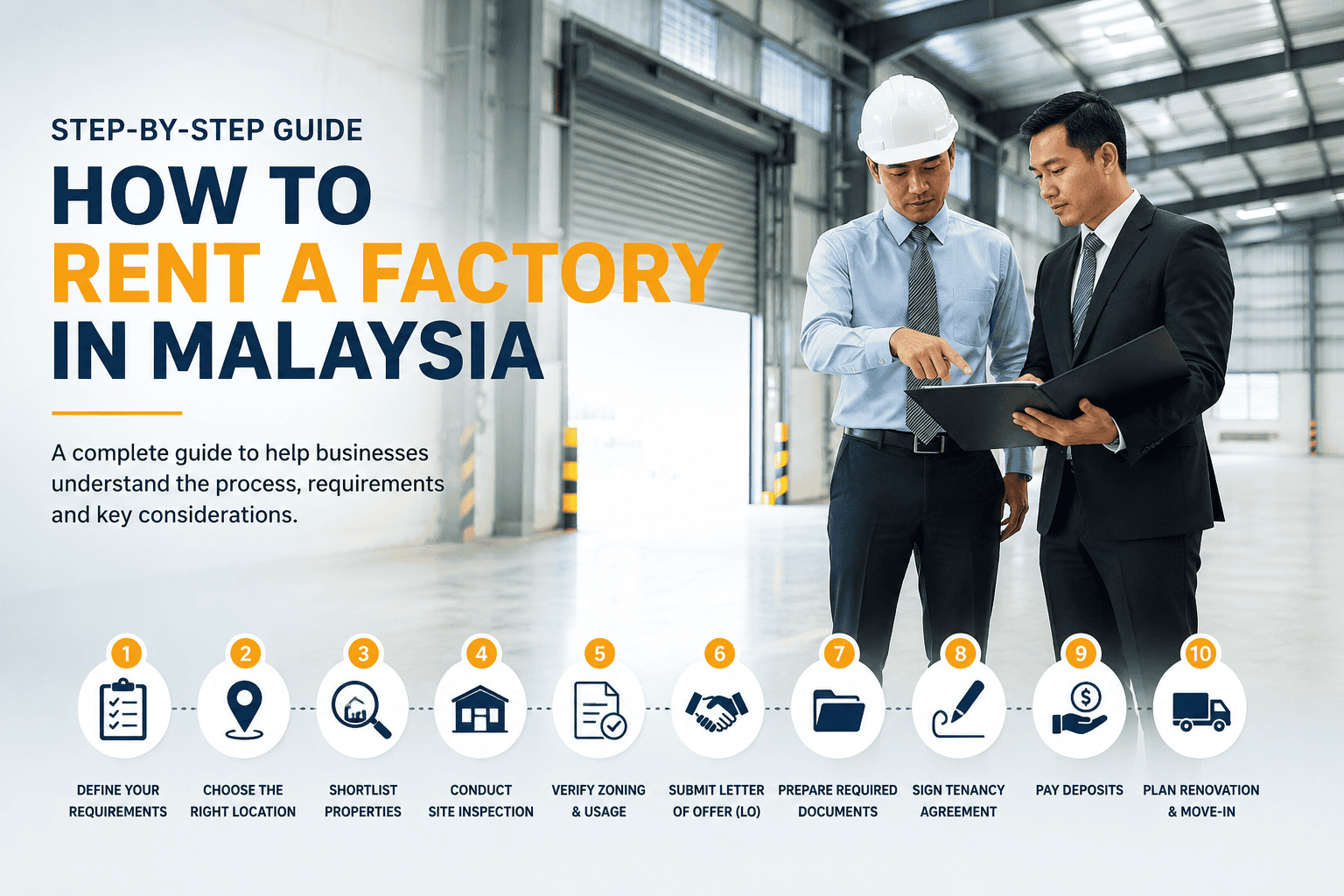
Step 1: Define Your Operational Requirements
Before viewing properties, determine what your business actually needs.
Key considerations include:
Space Requirements
- Built-up size
- Land area
- Storage requirements
- Office space requirements
Ceiling Height
Different industries require different clear heights.
Examples:
- General warehouse: 20–30 feet
- Racking warehouse: 30–40 feet
- Manufacturing: depends on machinery requirements
Power Supply
Check the required electrical capacity.
Common industrial requirements:
- 60 Amp
- 100 Amp
- 200 Amp
- 400 Amp and above
Vehicle Access
Consider:
- 20-foot container access
- 40-foot container access
- Trailer access
- Loading bays
Step 2: Choose the Right Industrial Location
Choosing the right industrial location is one of the most important decisions when renting a factory. The ideal location depends on your business operations, logistics requirements, workforce accessibility, power supply, zoning and future expansion plans.
Kajang–Balakong Industrial Corridor
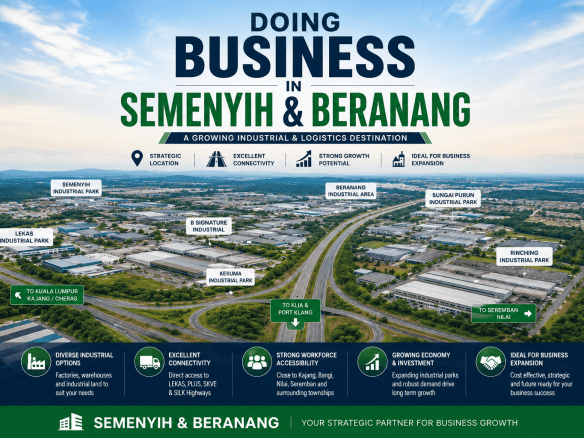
One of Southern Klang Valley’s most established industrial corridors with excellent connectivity via LEKAS, SILK, SKVE, BESRAYA and PLUS.
Best suited for:
- Manufacturing
- Engineering & Fabrication
- Warehouse & Distribution
- Logistics Operations
- E-Commerce Fulfilment
- Printing & Packaging
- Food Processing
- Automotive Related Businesses
- Trading & Distribution
- Building Materials & Hardware Suppliers
Semenyih–Seremban Industrial Corridor
A fast-growing industrial corridor offering larger land parcels, competitive pricing and excellent connectivity to KLIA, Klang Valley and Negeri Sembilan.
Best suited for:
- Manufacturing
- Engineering & Fabrication
- Logistics & Distribution
- Warehouse Operations
- E-Commerce Fulfilment
- Automotive Industry
- Food Processing
- Printing & Packaging
- Building Materials
- Trading & Distribution
- Industrial Processing
- Technology & Electronics Manufacturing
Puchong–Sunway Industrial Corridor
A mature industrial hub strategically located in the heart of Klang Valley with excellent access to Kuala Lumpur, Petaling Jaya and Subang Jaya.
Best suited for:
- Warehouse & Distribution
- Logistics Operations
- E-Commerce Fulfilment
- Engineering Businesses
- Printing & Packaging
- Automotive Industry
- Building Materials Suppliers
- Trading & Distribution
- Showrooms & Service Centres
- Light Manufacturing
- Regional Distribution Hubs
Shah Alam–Klang Industrial Corridor
Malaysia’s premier industrial and logistics hub with direct access to Port Klang, making it ideal for large-scale manufacturing and export-oriented businesses.
Best suited for:
- Manufacturing
- Heavy Manufacturing
- Engineering & Fabrication
- Automotive Industry
- Electronics & Semiconductor
- Logistics & Distribution
- Regional Warehousing
- E-Commerce Fulfilment
- Import & Export Businesses
- Container Depot Operations
- Steel & Metal Processing
- Food Manufacturing
- Building Materials Industry
Kepong–Rawang Industrial Corridor
A rapidly growing industrial corridor in Northern Klang Valley offering excellent highway connectivity and a wide range of industrial property options.
Best suited for:
- Manufacturing & Engineering
- Logistics & Warehousing
- E-Commerce Fulfilment Centres
- Automotive & Machinery Industries
- Building Materials & Hardware Distribution
- Food Processing & Distribution
- Packaging & Printing
- Trading & Distribution
- Industrial Service Providers
- Industrial Property Investment
Choose the corridor that best matches your operational requirements rather than simply selecting the lowest rental. Factors such as accessibility, zoning, power supply, logistics efficiency and future expansion opportunities will have a significant impact on your long-term business success.
Step 3: Shortlist Suitable Properties
Compare several factories before making a decision.
Evaluate:
✓ Rental rate
✓ Built-up size
✓ Land area
✓ Ceiling height
✓ Power supply
✓ Loading facilities
✓ Parking availability
✓ Highway accessibility
✓ Future expansion potential
Avoid choosing solely based on rental price.
A slightly higher rental property may save significant logistics and operational costs over time.
Step 4: Conduct Site Inspection
A physical inspection is essential.
During viewing, check:
Building Condition
- Roof leakage
- Wall cracks
- Structural defects
- Floor condition
Utilities
- Water supply
- Electricity connection
- Internet infrastructure
Safety Compliance
- Fire extinguishers
- Sprinkler systems
- Emergency exits
- Bomba requirements
Accessibility
- Container movement
- Turning radius for trucks
- Loading and unloading areas
Step 5: Conduct Site Inspection
Not all industrial properties can accommodate every type of business.
Confirm:
- Industrial zoning
- Manufacturing approvals
- Storage usage
- Environmental requirements
- Licensing requirements
This is particularly important for food processing, chemical handling, and heavy industrial operations.
Step 6: Conduct Site Inspection
Once you’ve identified a suitable property, the next step is to submit a Letter of Offer.
The LO typically includes:
- Rental amount
- Rental period
- Security deposit
- Utility deposit
- Commencement date
- Special conditions
Once accepted by both parties, the property is generally reserved while the tenancy agreement is prepared.
Step 7: Prepare Required Documents
Landlords commonly request:
For Companies
- SSM Company Profile
- Business Registration Documents
- Director IC copies
- Latest financial information
- Business description
For Individuals
- NRIC copy
- Employment information
- Supporting financial documents
Requirements vary depending on the landlord.
Step 8: Engage Lawyer To Prepare Tenancy Agreement
This will involves stamping fees and legal fees, charges are varies based on the rental amount and rental period.
Example:
Monthly Rental: RM35K
Rental Period: 3 years
Stamping Fees: RM6644
Legal Fees & Disbursement Fees: RM7650
The tenancy agreement outlines the legal rights and obligations of both parties.
Important clauses include:
- Rental term
- Renewal options
- Renewal rental rate
- Maintenance responsibilities
- Early termination conditions
- Security deposit terms
Always review the agreement carefully before signing.
Step 9: Pay Deposits
Typical industrial rental payments include:
Security Deposit
Usually equivalent to:
- 2 to 3 months rental
Utility Deposit
Usually:
- 1 month rental
Advance Rental
Usually:
- 1 month rental
Example:
Monthly Rental: RM10,000
- Security Deposit: RM20,000
- Utility Deposit: RM10,000
- Advance Rental: RM10,000
Total Initial Payment: RM40,000
Step 10: Plan Renovation and Move-In
After signing:
- Apply for utilities if required, usually owner will require tenant to apply for own TNB account
- Plan renovation works
- Arrange internet installation
- Schedule equipment relocation
- Coordinate warehouse racking installation
- Apply for necessary business license and permit
Proper planning can minimize business downtime during the move.
Common Mistakes to Avoid
Choosing Based on Price Alone
The cheapest factory is not always the most cost-effective.
Ignoring Power Requirements
Upgrading electrical supply later can be expensive and time-consuming.
Overlooking Container Access
Insufficient access can severely impact logistics operations.
Not Planning for Expansion
Businesses often outgrow facilities faster than expected.
Consider future growth when selecting a factory.
Frequently Asked Questions
How much deposit is required to rent a factory?
Most landlords require approximately 4 to 5 months’ equivalent rental upfront, including security deposits and advance rental.
How long is a typical factory tenancy?
Most industrial tenancy agreements range from 2 to 3 years, with the option to renewal for another 2-3 years
Can I renovate a rented factory?
Generally yes, subject to landlord approval and tenancy agreement terms.
Do I need a lawyer?
Yes you need to engage a lawyer to prepare the tenancy agreement.