Choosing between a commercial property and an industrial property is one of the first decisions every business owner or investor needs to make. While both offer opportunities for growth and investment, they serve very different purposes.
Understanding the differences can help you select a property that supports your operations today while providing long-term value for the future.
What is Commercial Property?
Commercial properties are designed for businesses that provide products or services directly to customers or operate in an office environment.
Examples include:
• Shoplots
• Retail outlets
• Shopping mall units
• Office buildings
• Business suites
• Medical clinics
• Restaurants and cafes
These properties are typically located in town centres, commercial districts or mixed developments where customer accessibility is important.
What is Industrial Property?
Industrial properties are generally designed to support manufacturing, warehousing, logistics, storage and production activities.
Examples include:
• Factory buildings
• Warehouses
• Industrial land
• Detached factories
• Semi-detached factories
• Logistics hubs
• Distribution centres
Industrial properties are usually located within designated industrial parks with supporting infrastructure such as heavy vehicle access and loading facilities.
Key differences
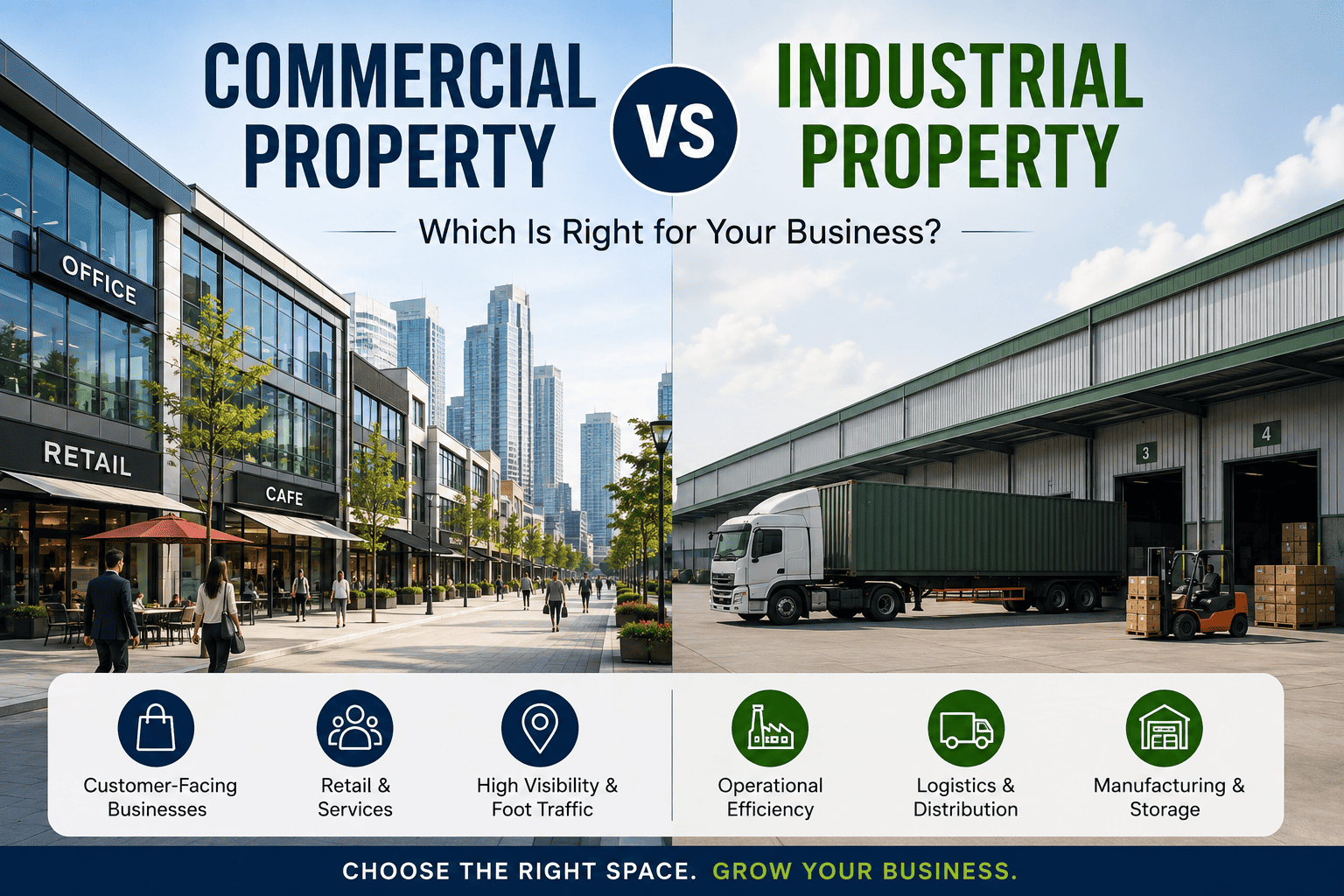
| Commercial Property | Industrial Property |
|---|---|
| Customer-facing businesses | Manufacturing & logistics |
| Shoplots, offices, retail | Factories, warehouses, industrial land |
| High pedestrian traffic | Heavy vehicle accessibility |
| Focus on visibility | Focus on operational efficiency |
| Suitable for retail & services | Suitable for production & storage |
Which Businesses Should Choose Commercial Property?
Commercial properties are ideal for businesses such as:
• Retail stores
• Cafes and restaurants
• Clinics
• Tuition centres
• Corporate offices
• Professional services
• Fitness centres
• Showrooms
These businesses rely on customer accessibility, visibility and convenient parking.
Which Businesses Should Choose Industrial Property?
Industrial properties may be suitable for businesses such as:
• Manufacturers
• Logistics companies
• Warehousing operations
• Engineering companies
• Food processing
• Furniture manufacturers
• Automotive businesses
• Distribution companies
These businesses may require larger floor areas, loading facilities and suitable access for trucks or commercial vehicles.
Some businesses may operate from either commercial or industrial premises, depending on the nature of their activities, permitted use, planning zoning and local authority approvals.
Investment Considerations
Commercial properties generally attract businesses serving consumers, while industrial properties often appeal to manufacturers, logistics operators and SMEs.
Factors to evaluate include:
• Rental demand
• Location
• Accessibility
• Infrastructure
• Future development plans
• Operational requirements
Industrial properties may offer larger land areas and operational flexibility, whereas commercial properties can benefit from strong visibility in high-traffic locations.
Examples of Established Commercial Areas inKlang Valley
• Bandar Puteri Puchong
• Kota Damansara
• Cyberjaya
• Bangsar South
• Petaling Jaya
• KL City Centre
Examples of Established Industrial Areas
• Balakong
• Kajang
• Semenyih
• Shah Alam
• Klang
• Nilai
• Puchong
• Rawang
Which One is Right for You?
There is no universal answer.
If your business depends on customer visits, retail sales or office operations, a commercial property may be the better fit.
If your operations involve manufacturing, warehousing, storage or logistics, an industrial property will typically provide the space, facilities and infrastructure required for efficient operations.
Before purchasing or renting a property, consider your current operational requirements, budget and future expansion plans. Buyers and tenants should also confirm the land use, planning zoning, permitted activity, building approvals and licensing requirements with the relevant authorities.
The right property should not only meet your present business needs, but also support your long term growth and operational goals.