
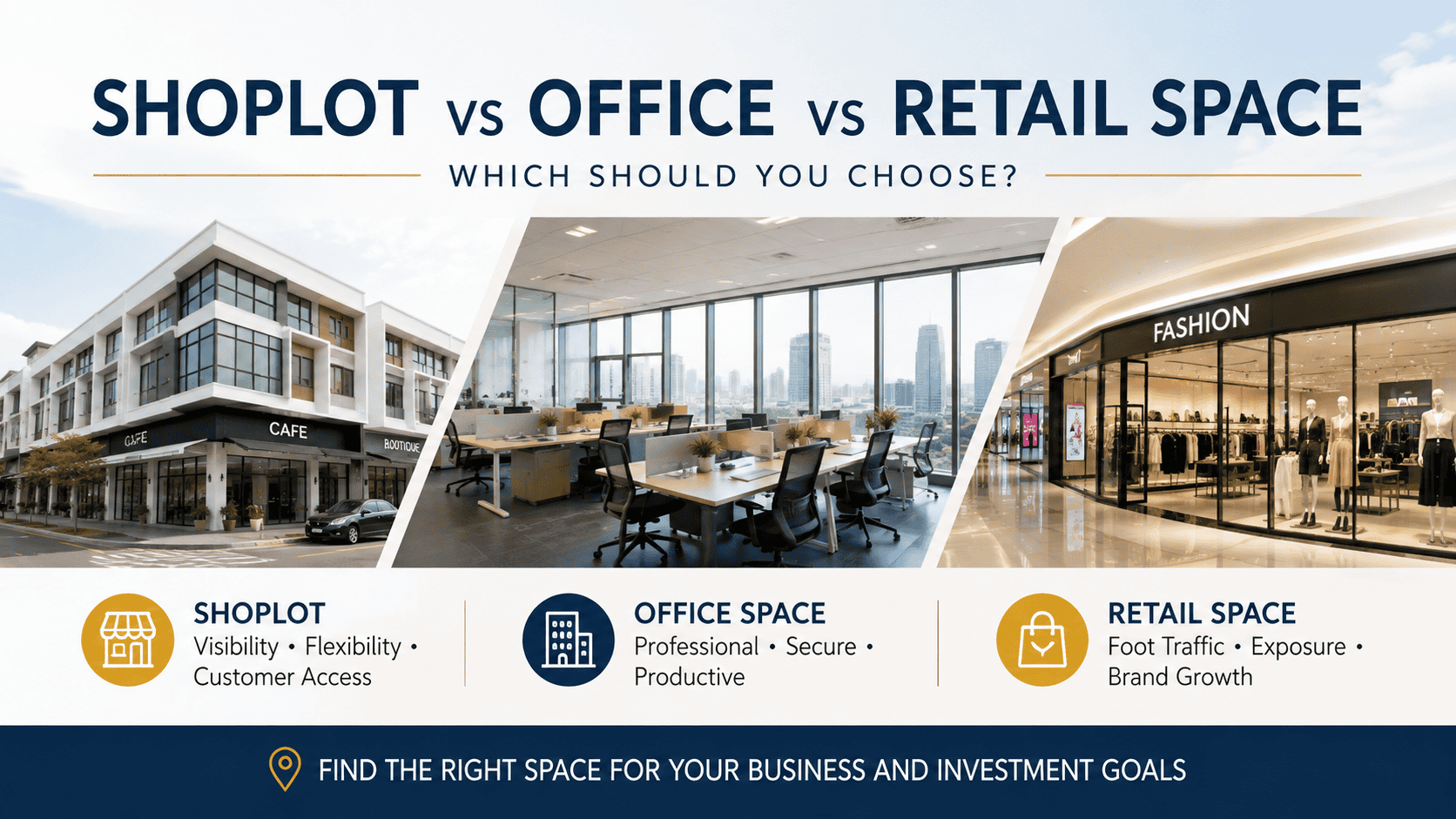
Not all commercial properties serve the same purpose. Whether you’re opening a new business, relocating your office or investing in commercial real estate, choosing the right property type can significantly impact your success.
The three most common options are shoplots, office spaces and retail units—but which one is the right choice?
Shoplots
Shoplots are one of the most versatile commercial property types in Malaysia.
They often feature:
• Ground floor retail space
• Upper floors for offices or storage
• Road frontage
• Customer parking availability, depending on the development and location
• Greater flexibility in operating hours, subject to local regulations and building management rules
Best For
• Restaurants
• Cafes
• Clinics
• Showrooms
• Convenience stores
• Service centres
• Boutique retailers
Advantages
• High visibility
• Greater branding opportunities
• Flexible business operations
• Suitable for owner occupation or investment
Office Spaces
Office spaces are designed for administrative and professional businesses.
Common users include:
• Corporate headquarters
• Accounting firms
• IT companies
• Marketing agencies
• Law firms
• Consultants
Advantages
• Professional business environment
• Modern facilities
• Security and maintenance services
• Easy access for employees
Depending on the building, office spaces may offer lifts, reception areas, security, meeting facilities and allocated or shared parking.
Retail Spaces
Retail units are commonly located within shopping malls, lifestyle centres, commercial podiums and mixed developments.
These units may benefit from:
• Existing shopper traffic
• Mall promotions and marketing activities
• Security services
• Air conditioned surroundings
• Shared facilities
Best For
• Fashion retailers
• Jewellery stores
• Mobile phone shops
• Beauty salons
• Gift shops
• Lifestyle brands
Comparison
| Shoplot | Office Space | Retail Space |
|---|---|---|
| Customer-facing or service based | Administrative or professional work | Consumer focused retail |
| Street frontage | Located within an office building | Commonly located in a mall or retail development |
| Greater operating flexibility | Professional working environment | Access to shopper traffic |
| Flexible use of different floors | Supports corporate image | Supported by mall facilities and promotions |
| Suitable for many SMEs | Suitable for professional services | Suitable for retail and lifestyle brands |
Which Property Should You Choose?
Choose a Shoplot if:
• Street visibility and direct customer access are important.
• Customers visit your premises regularly.
• You want greater operational flexibility.
• You need both retail and office space.
Choose an Office if:
• Your business is service-based.
• You meet clients professionally.
• Employees work primarily at desks.
• Corporate image is important.
Choose a Retail Unit if:
• You rely on shopper foot traffic.
• Your products benefit from impulse purchases.
• You want to leverage mall marketing activities.
• You operate a consumer-focused retail brand.
Investment Perspective
Each property type appeals to different tenant profiles.
When investing, consider:
• Location
• Tenant demand
• Accessibility
• Parking availability
• Surrounding developments
• Future appreciation potential
Understanding the local market can help you identify properties that align with your investment objectives.
Making the Right Choice
The right property depends on how your business operates, how customers reach you and what facilities you require.
A shoplot may suit businesses that value street visibility, direct customer access and greater operational flexibility. An office may be more appropriate for professional, administrative or corporate operations. A retail unit may benefit businesses that depend on shopper traffic and a consumer focused environment.
Before purchasing or renting, consider the property’s location, permitted use, accessibility, parking, building facilities, operating costs and future business requirements.
The suitability of a shoplot, office or retail space will also depend on the business activity and local authority requirements. Buyers and tenants should confirm the relevant approvals and licensing requirements before making a commitment.