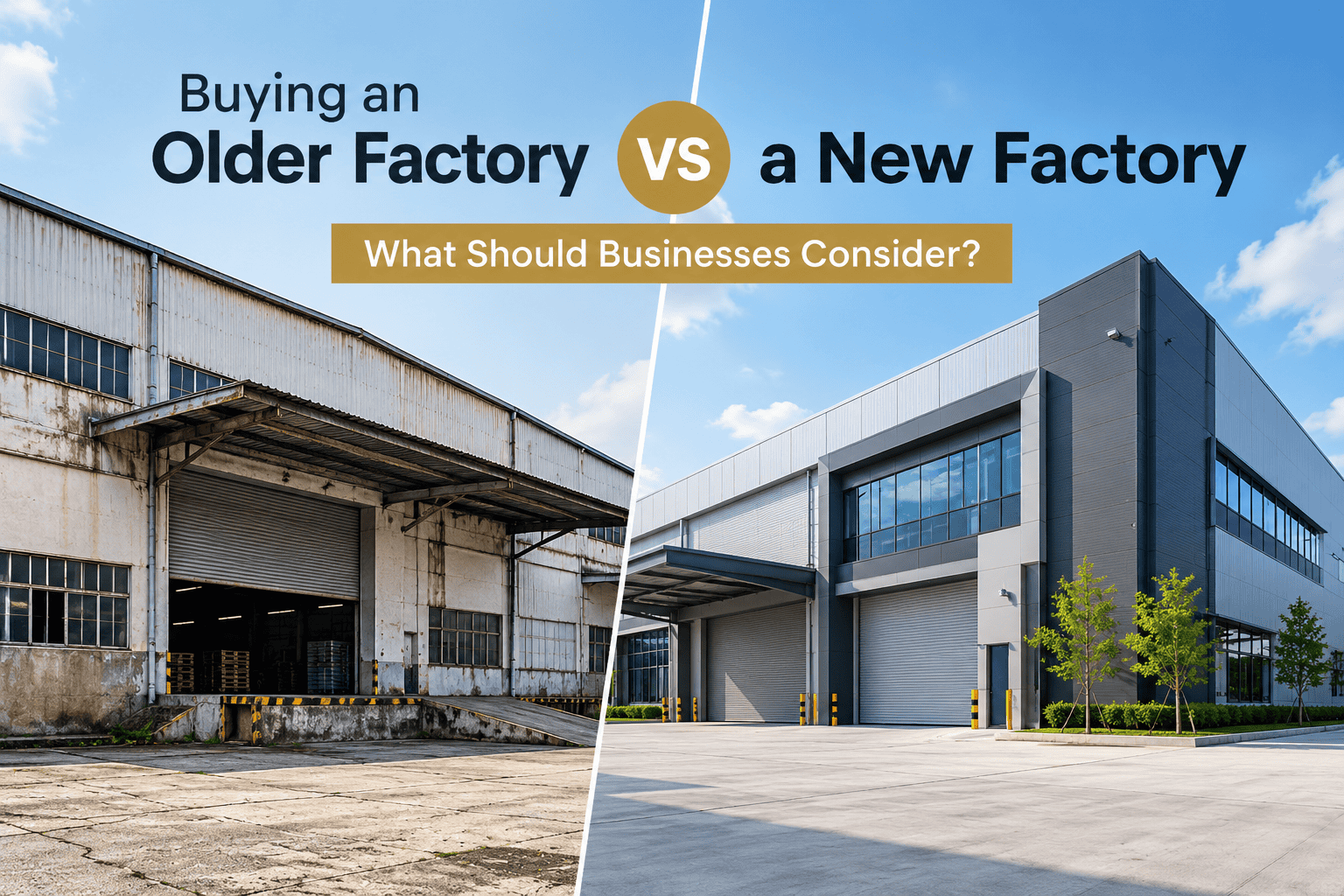
When searching for an industrial property, businesses often face a common choice: buy an older factory in an established industrial area or choose a newer factory development?
An older factory may offer a more established location, larger land area or a lower asking price. A newer factory may provide more modern specifications and require less upgrading before operations begin.
Neither option is automatically better. The right choice depends on the business, the condition of the property and the total cost required to make it operational.
- Don’t Compare Purchase Price Alone
An older factory may initially appear more affordable, but the purchase price is only one part of the equation.
Depending on its condition, additional costs could include:
- Roof repairs
- Electrical upgrades
- Flooring works
- Plumbing and drainage
- Fire safety improvements
- Office renovation
- Loading-area modifications
- Machinery installation requirements
A newer factory may have a higher purchase price but potentially require fewer immediate improvements.
Instead of comparing properties based purely on price per square foot, businesses should consider the total cost of getting the factory ready for operations.
- Building Specifications Matter
Industrial requirements have changed significantly over the years.
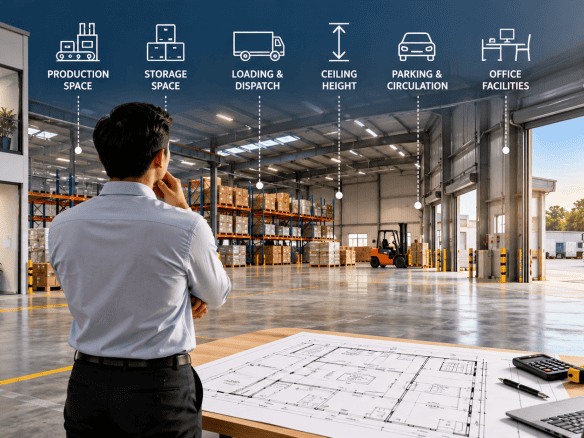
Businesses today may require higher ceilings, heavier floor loading, larger roller shutters, better truck accessibility or more electrical capacity than some older factories were originally designed to support.
Before purchasing, consider whether the property can accommodate your actual operations.
For example, a warehouse operator may place greater importance on ceiling height and loading access, while a manufacturer may need to consider machinery layout, floor loading and power requirements.
A newer building may offer more modern specifications, but this should never be assumed. The actual specifications of each property still need to be checked.
- Older Factories May Have a Location Advantage
One advantage of older industrial properties is that many are located within mature industrial areas.
Established locations such as parts of Shah Alam, Klang, Puchong, Balakong and Kajang may already have surrounding suppliers, workshops, logistics providers, restaurants, banks and other supporting businesses.
They may also have an existing workforce living nearby.
Newer industrial developments, on the other hand, may offer better-planned infrastructure and newer facilities but could be located further from an existing company’s customers, suppliers or employees.
This is why location should be evaluated based on the entire business operation, not simply the age of the building.
- Check the Condition Before You Commit
The physical condition of an older factory deserves particular attention.
A building that looks acceptable during a short viewing may still have issues that become expensive later.
Buyers should pay attention to areas such as the roof, structural condition, flooring, drainage, electrical systems and signs of previous alterations.
Where appropriate, engaging qualified professionals to inspect the property before purchase can help identify issues that may not be obvious during a normal property viewing.
For industrial properties, this can be particularly important because the building may have been modified over the years to suit different occupiers.
- Consider How Quickly You Need to Move In
Timing can also influence the decision.
A business that needs to relocate quickly may prefer a property requiring minimal renovation.
An older factory that requires several months of upgrading could delay machinery installation and operations, even if the purchase price is attractive.
On the other hand, a well-maintained older factory may already have many of the features the business requires and could potentially be occupied with relatively minor modifications.
The key question is not simply “Is it old or new?” but “How much work is required before we can operate?”
- Think About Future Requirements
A factory should ideally support the business for more than its immediate needs.
Before purchasing, consider whether the property can accommodate:
- Additional machinery
- Higher inventory levels
- More employees
- Additional loading activity
- Changes to production
- Future expansion
An older factory sitting on a larger piece of land may sometimes provide greater flexibility, while a newer development may offer more efficient building specifications but less room for physical expansion.
Again, this depends entirely on the individual property.
Old or New? Focus on Operational Fit
There is no simple answer to whether an older or newer factory is the better purchase.
A well-maintained older factory in the right location may be more suitable than a brand-new property that does not fit the business’s operations. Likewise, a newer factory with the right specifications may reduce the amount of upgrading required before moving in.
Before making a decision, compare:
Purchase price + upgrading costs + location + building specifications + time to become operational + future requirements.
The best industrial property is not necessarily the newest or the cheapest.
It is the one that provides the best overall fit for the way your business needs to operate.